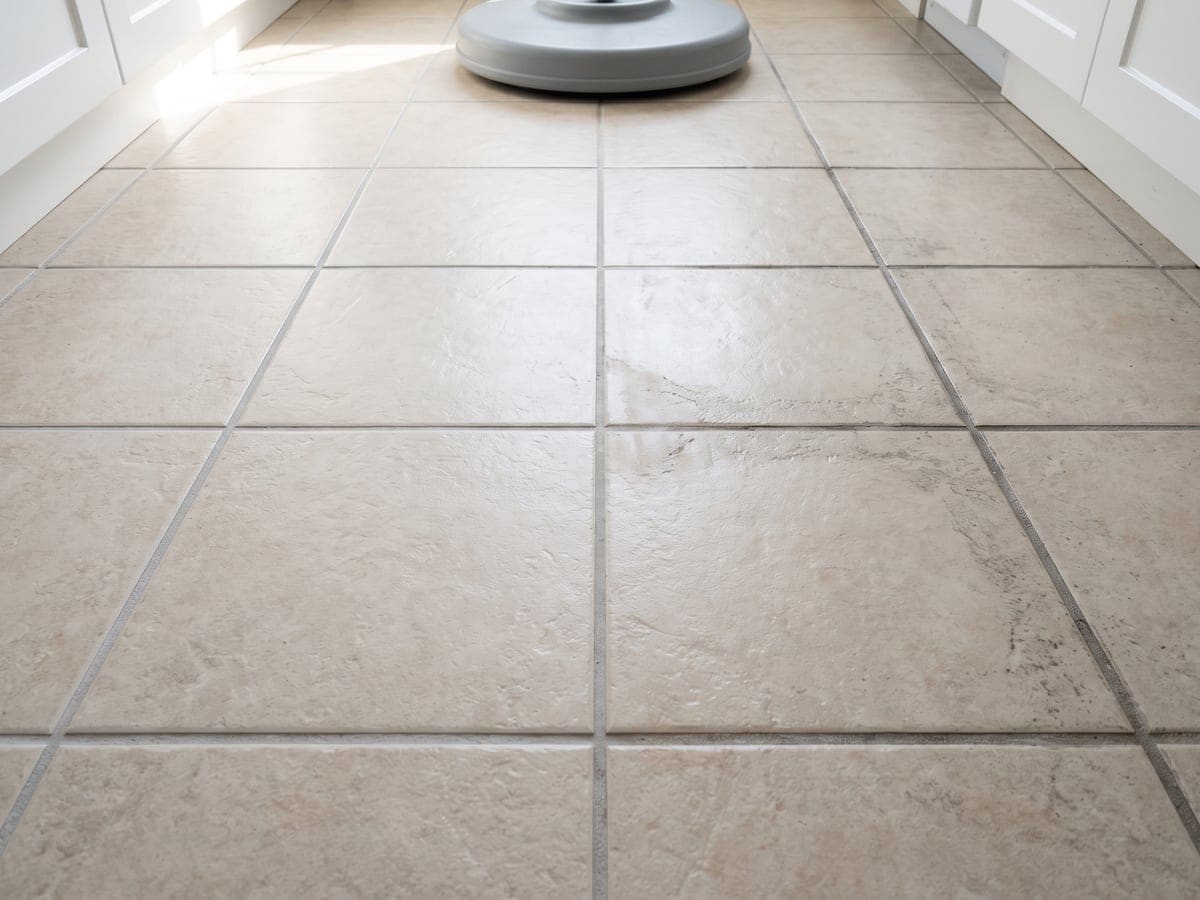
How tile and grout get cleaned, line by line
1. A look at the tile, the grout and the room
The floor gets looked at before any work starts: the tile face, the grout lines and the places that bother you most. We check for cracked or loose tiles, missing grout, and corners near a shower or a dishwasher. Natural stone is a different surface and gets a different method, so if the floor is stone, tell us when you call.
2. Dry soil off first
A thorough sweep or vacuum pulls dirt, hair and crumbs off the tile face and out of the lines. The lines hold more than they look like they would, and the wet work later is a lot cleaner because of it.
3. A pre-treatment on the grout lines
A grout pre-treatment is laid along the lines and worked into them so it can lift the soil and staining sitting in the pores of the cement. Grout is porous. The pre-treatment sits a short while before any agitation.
4. Agitation along the lines
The grout lines are worked line by line, so the lifted soil comes up out of the channel instead of smearing across the face of the tile. Edges along the baseboard, around the toilet and into the corner where the floor meets a cabinet get the same attention.
5. A hot rinse
A hot rinse goes down on the floor and gets pulled right back up in the same pass. The tile face gets a wash too, not only the lines. Across a kitchen or a bath you can see the color come up as the work moves.
6. A dry wipe and a last look
A dry wipe picks up the last of the moisture and shows where to come back for a second pass. Spots that need more may get another round, or get flagged for the kind of attention a wet visit does not finish.
| Floor | What builds up | How it gets cleaned |
|---|---|---|
| Glazed ceramic | Grease, soap film, foot soil | A pre-treatment on the lines, then a spinner across the whole floor |
| Porcelain | Light soil on the face, dirt in the lines | The same two steps, with brushes on the lines |
| Textured or matte tile | Soil that catches in the texture of the tile face | More time on the face along with the lines |
| Cement grout | Oils and dirt soaked into the porous cement | Pre-treatment, agitation, hot rinse recovered on the spot |
| Epoxy grout | Surface film; the pores are already filled | A rinse and a wipe; harsher work is rarely needed |
| Natural stone | A different mineral surface | Tell us when you call; the method and tools change |
The lines pick up the oil from a kitchen, the dust tracked in on shoes, and the drip paths from a mop that pushed dirty water across the floor more than once. The cleaning gets at that soil. For the carpet next door to the tile, see the carpet next door.
When tile and grout cleaning fits, and when it does not
- Dark grout lines in a kitchen, entry, laundry room or bath.
- A floor that mopping cannot get back to the color it was.
- A move-in or a move-out where the tile needs to look right.
- A rental between tenants.
Standing water from a leak, a toilet overflow or a dishwasher is a restoration job, not a cleaning one.
What the visit covers
A tile and grout visit covers the floor and the lines you name on the call. Baseboards and the edges around a toilet or a cabinet are part of the job unless you want them left alone. We go over the method and what we are and are not touching before any water hits the floor. Sealing is a separate step not included here.