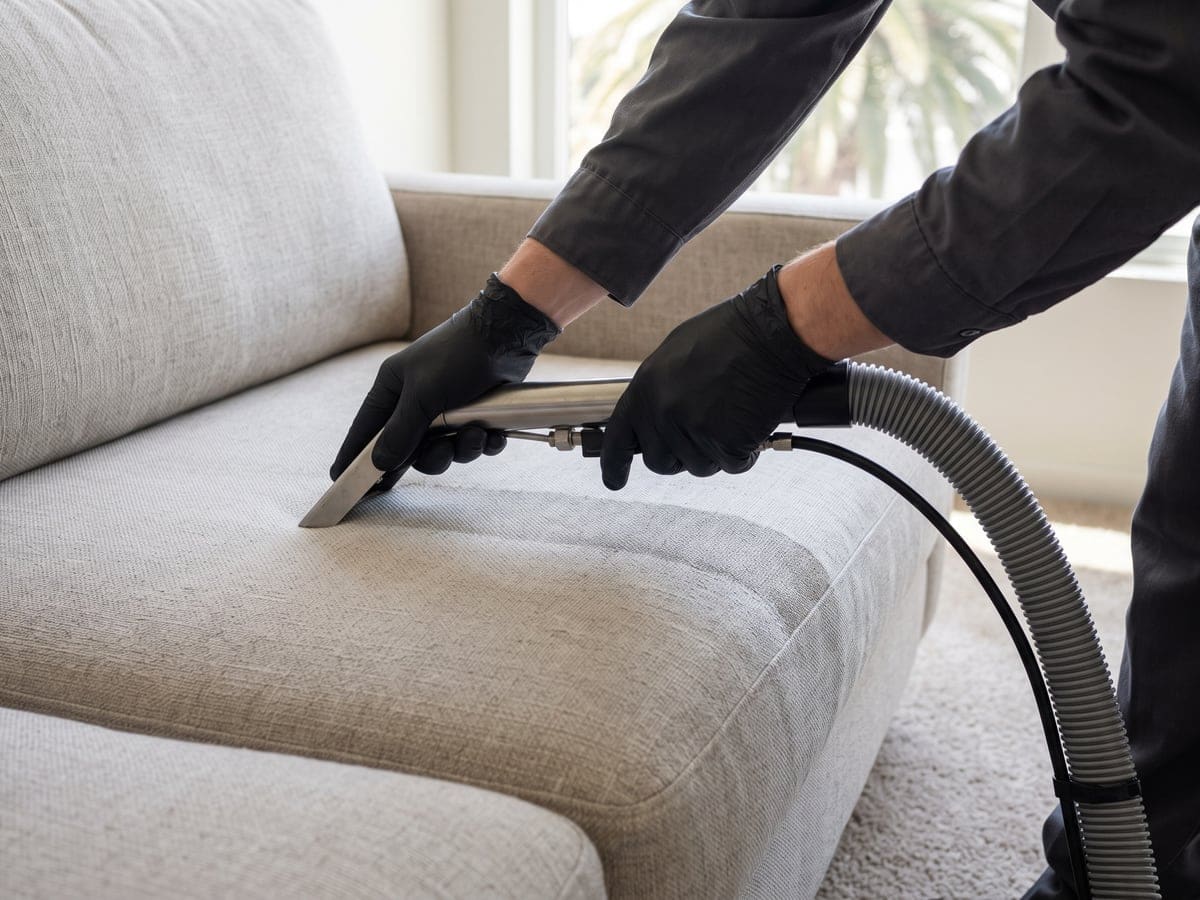
How a couch gets cleaned, cushion by cushion
1. The fabric and the tag first
Before any water or cleaner goes on the piece, our crew finds the maker's tag and reads the cleaning code sewn into the seat deck or under the cushions. The code tells us what the maker says about cleaning that fabric.
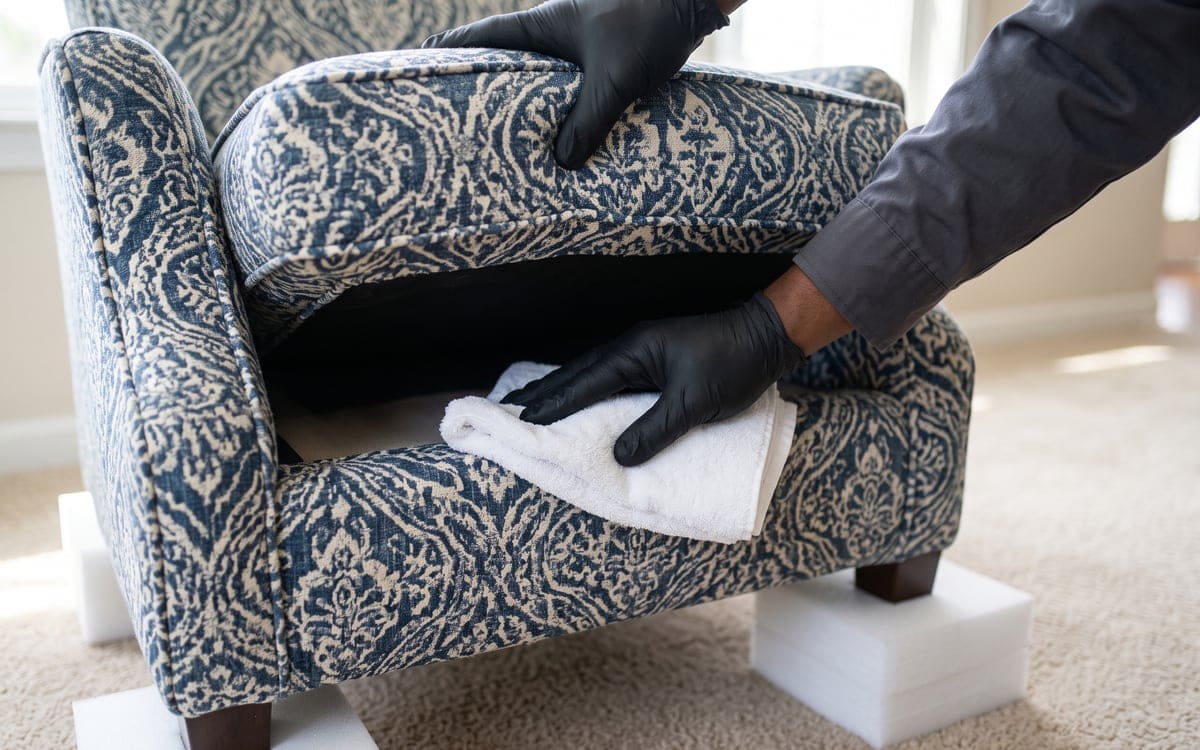
A hidden corner, behind an arm or on the deck under a cushion, gets a small test spot: a drop of water, a dab of the cleaner we are planning to use, and a white cloth pressed down. If any color lifts, the plan changes before anything else happens.
2. A thorough vacuum, seams and crevices
With the cushions off, the piece gets a careful vacuum: the deck under the cushions, both sides of each cushion, the arms, the seams and the piping. Dust and hair sit in the crevices where hands cannot reach. If a wet cleaning starts without this step, that work has to be done later through damp fabric, which is slower and less thorough.
3. Pre-treating the spots and the hand places
Arms, headrests and the fronts of the seats take the most wear because that is where hands and heads rest. A pre-treatment goes on those places, and on any spots we found at the walk, matched to the fabric. The idea is to soften what is there so the cleaning tool can lift it out without drowning the piece in solution.
4. Cleaning fitted to the fabric
The method is fitted to the fabric: a water-based clean for pieces that take water, or a low-moisture pass for fabrics that do not. We talk through which method the piece is getting before any work starts. For pieces with removable covers, the fabric comes off and gets a separate approach.
5. Leather, wiped by hand
A leather sofa is wiped by hand with a soft cloth or a soft brush and a cleaner meant for leather. Nothing is soaked, and no water sits on the surface. The arms and the seat take the most work because leather darkens where skin oils and lotion settle in. Finished and unfinished leathers get different care, and we check first before anything goes on.
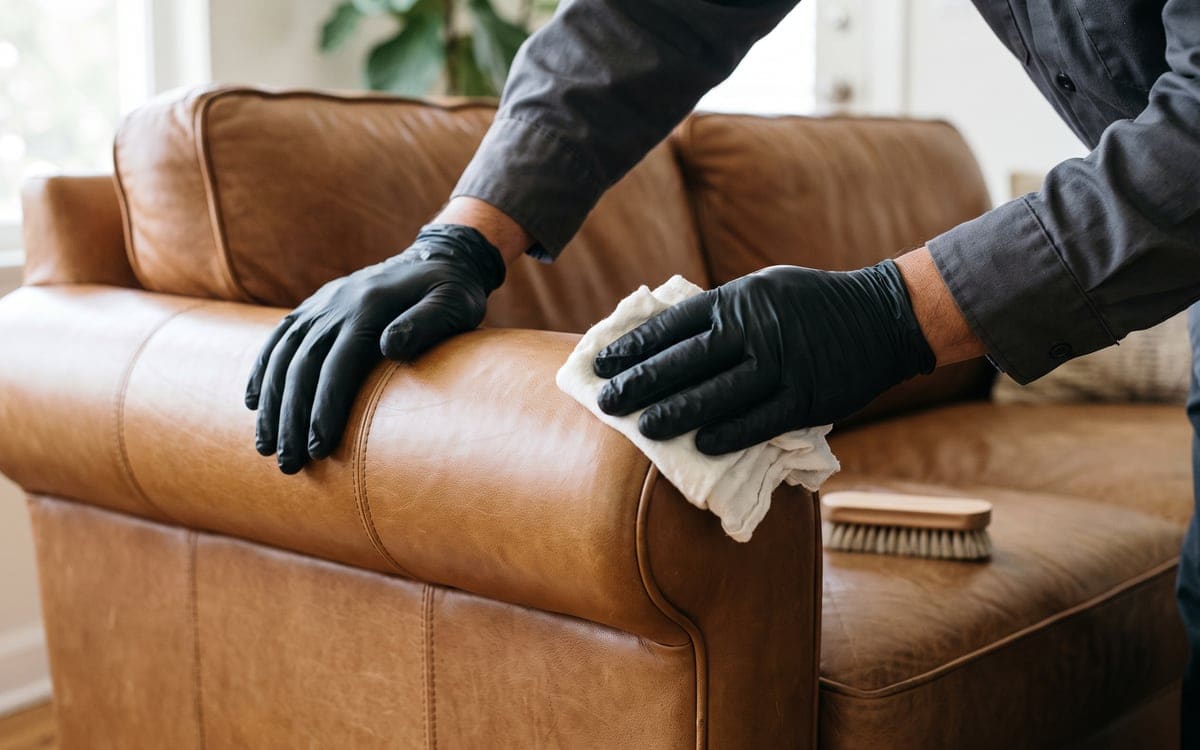
Fabric and leather couches are cleaned differently
The fabric and its tag decide the method, and leather is never cleaned like cloth.
Fabric
- The maker's tag and a hidden test spot come first.
- A small upholstery tool, wet or low-moisture to suit the fabric.
- Cushions stood on edge to dry.
Leather
- Wiped by hand with a soft cloth or brush.
- Never soaked.
- Finished and unfinished leather get different care.
6. Cushions on edge, drying with airflow
Once the cleaning is done, cushions go back on the piece on their edges rather than flat, so air reaches both sides at once. A fan near the room and a window cracked open if the weather allows, and the piece dries from the surface in. A hair dryer or a space heater against damp upholstery can shrink the fabric or crack a leather finish, so keep heat away from the piece.
| Fabric | What tends to happen | How it gets cleaned |
|---|---|---|
| Cotton and linen | Darkening on arms and headrests, water rings from spills | A water-based clean, worked gently with the grain |
| Polyester and microfiber | A flattened pile, oily spots along the seat fronts | Cleaner-driven, with a brush to lift the pile back |
| Velvet | A nap that goes two different shades, pressure marks | A low-moisture pass, groomed with the nap afterward |
| Wool blends | Pet hair held deep in the fibers, matted texture | A careful vacuum first, then a method fitted to the fiber |
| Leather | Darkening where skin touches, a loss of surface sheen | A hand wipe with a leather cleaner, no soaking |
| Outdoor fabric | Dark spots where damp sits, dust ground in by sun | A water-based clean rated for outdoor use |
For the carpet underneath, the carpet under it is its own job, and the rugs beside it belong on the rug cleaning page. A dog or a cat that naps on the couch often leaves a smell that reaches pet spots on the carpet as well.
When couch cleaning fits
When it is the right page
- Arms and headrests gone darker than the back
- A spill, a food stain or a crayon mark
- Pet hair and a lived-in smell
- A move, or guests on the way
- A sectional that has been in the family room for years
When another service fits better
- The carpet under the couch is as dark as the cushions: a full carpet cleaning
- The mattress on the bed in the next room: a mattress cleaning instead
- A torn seam, a broken frame or cushions that have gone flat: an upholsterer
- The couch has been under water from a leak or a flood: a restoration company
Once we have seen the piece, we can tell which column it sits in. A dark armrest with a sound frame is a cleaning. Cushions that give way the moment you sit are a repair or a replacement, and we would rather point that out than clean a piece that is on its way out. Call (323) 677-2006 and tell us what the couch looks like.
What the visit covers
A couch cleaning covers the whole piece: the deck under the cushions, both sides of each cushion, the arms, the back, the sides and the base skirt. Chairs, dining chairs, ottomans, headboards and a small sectional run on the same work. The method we plan to use gets talked through once we see the fabric and the tag, before any cleaning starts. Removable covers are gone over with the rest of the piece; what the care tag says about the covers is what we follow.