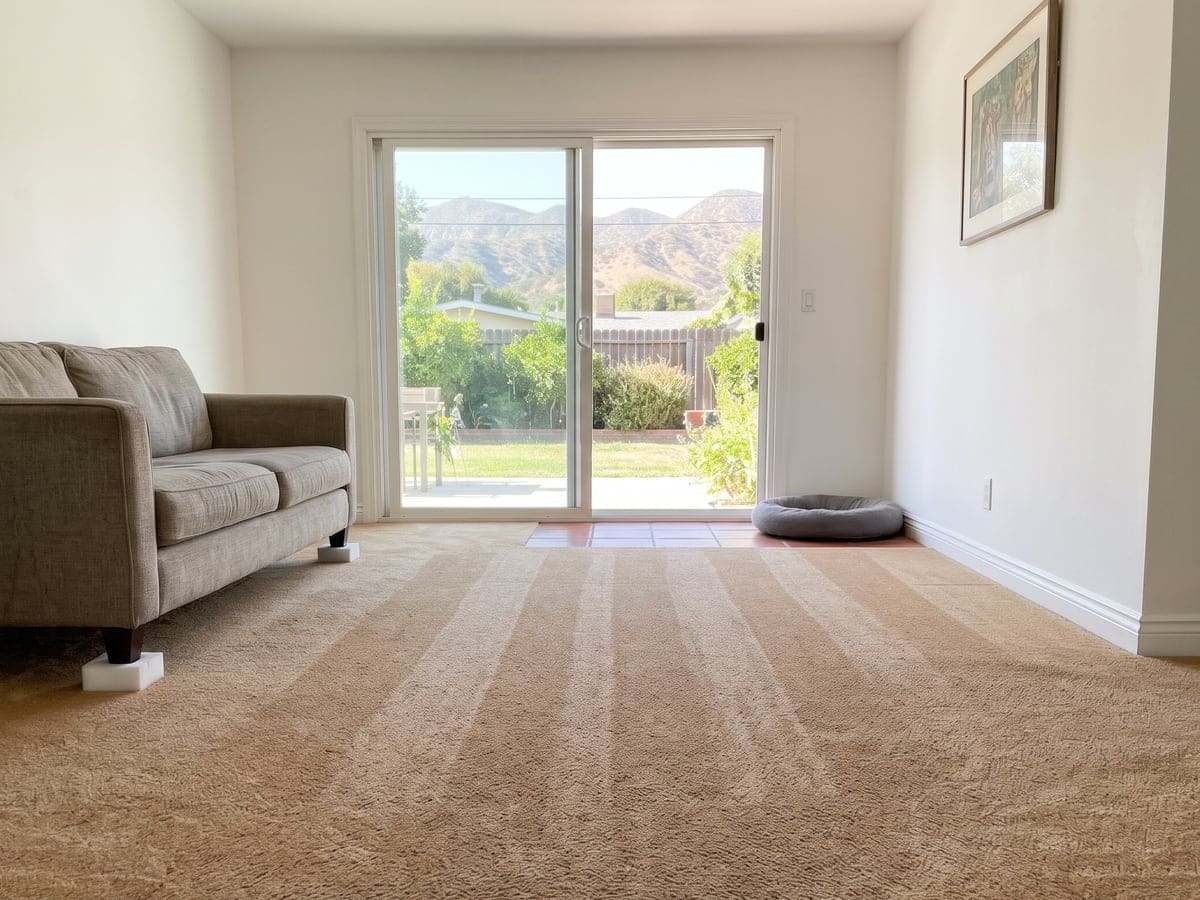
Rugs, carpet and mattresses in Burbank
Rugs and couches are on Burbank's accepted list for bulky pickup, with chairs, dressers, bed frames and tables.2 The same page's prohibited list files carpet and other floor coverings under construction materials, beside ceramic tile.2 The City's Household Hazardous Waste Collection page says carpet is recyclable and can be made into everyday products across various industries, and it sends readers to CarpetRecovery.org/CA for the nearest drop-off site and its hours.3
Bulky collections go to the landfill rather than recycling, the City says, except electronics, metal appliances, mattresses and box springs.2 Residents can also bring mattresses and box springs to the Recycle Center from Monday through Saturday, each household limited to one mattress and one box spring.2
Setting out bulky items in Burbank
The City says its crews serve all single-family homes in Burbank, 50 percent of multi-family homes and approximately 10 percent of commercial and industrial refuse customers.4 Bulky items stay in until the night before trash day, by the City's page, and then must sit at least five feet from fixed objects.2
Household hazardous waste in Burbank
Items like cleaners and solvents count as household hazardous waste in Burbank, along with paints, herbicides and insecticides, and the City calls it both dangerous and illegal to put such waste in the garbage, in recycling containers, down any drain or on the ground.3 Section 4-2-105 bars placing excluded waste for collection in any garbage, compost or recycling container; the code treats it under a heading that names dangerous substances and hazardous waste.5 Burbank residents can use the Drop Zone, a disposal collection program at the Recycle Center, where proof of residency such as ID may be requested.3 It takes items such as computers and televisions, but the City says chemicals, paint, motor oil and other unspecified household hazardous waste items are not accepted there.3
Storm drains in Burbank
Storm drains, unlike sewer systems, take run-off unfiltered and untreated straight to streams, rivers and eventually oceans, by the City's stormwater page.6 Burbank's code lists wastewater reaching the storm drain system from mobile auto washing, steam cleaning and mobile carpet cleaning, along with other such mobile commercial and industrial operations, on its list of prohibited industrial or commercial discharges, unless the discharge complies with an NPDES permit.7 Under section 8-1-1003, a discharge may enter that system only if it consists entirely of storm water or fits another exception the section lists.7
The City's stormwater page says the state stormwater permit essentially prohibits any non-storm water discharges from entering the drains.6 The good housekeeping provisions in section 8-1-1004, for any property's owner or occupant, bar leaving or exposing any fuel, chemical, garbage, animal waste, batteries or septic waste where it may actually or potentially reach City streets or the storm drain system.8
Burbank Water and Power
All of Burbank's water is imported, Burbank Water and Power's 2025 report says: the city has no local water rights, and while its Burbank Operable Unit treats water, the city depends on the Metropolitan Water District for supply.9 For 2025, Burbank Water and Power reports an average hardness of 286 ppm, the same as 16.7 grains per gallon.9
Burbank Water and Power's ordinance summary rules out hosing down driveways or sidewalks, says washing hardscape surfaces with water is prohibited, and tells readers to sweep.10 Its summary also allows no runoff onto public streets, sidewalks or driveways, says irrigation must be targeted and efficient, and says water belongs in the landscape rather than the street drain.10
Burbank's homes
Burbank's Census estimates come to about 46,243 housing units, about 42,995 occupied,11 and about 104,546 people.11 Detached houses and buildings of five or more units sit close together in Burbank at about 44 percent and about 41 percent of housing units by Census estimate, and buildings of two to four units hold about 10 percent.12
Burbank's median home dates from 195913 by Census estimate, and about 51 percent of housing units are older than 1960.13 Two-bedroom homes are Burbank's largest group by Census estimate at about 15,167, ahead of about 12,712 with three bedrooms, about 10,832 with one, about 3,347 studios, about 838 with five or more and about 3,347 with four.14 Most Burbank owner households, about 83 percent, have detached houses, and about 11 percent are in buildings with five or more units,15 Census estimates show.
Burbank households and tenant rules
By Census estimate, about 31 percent of Burbank renters and about 10 percent of its homeowners moved into their current home in 2020 or later.16 Burbank owner households average about 2.76 people and renter households about 2.15, about 2.41 overall17 by Census estimate. Someone living alone accounts for about 31 percent of Burbank households,17 with members under 18 in about 26 percent17 and members 65 or older in about 30 percent.17
The City says Burbank's Tenant Protection Ordinance took effect August 31, 2024, and reaches all residential rental units that California's Tenant Protection Act covers.18 The City's Landlord Tenant Commission is a volunteer body that educates the public on residential landlord-tenant issues, with no legal authority and no legal advice to give.18
Burbank weather
The Burbank Valley Pump Plant station's normal year brings 16.50 inches of precipitation,19 by NOAA's 1991-2020 normals. It logs 55.0 days a year of 90 degrees or hotter in those normals, and 1.4 nights at 32 degrees or colder.19