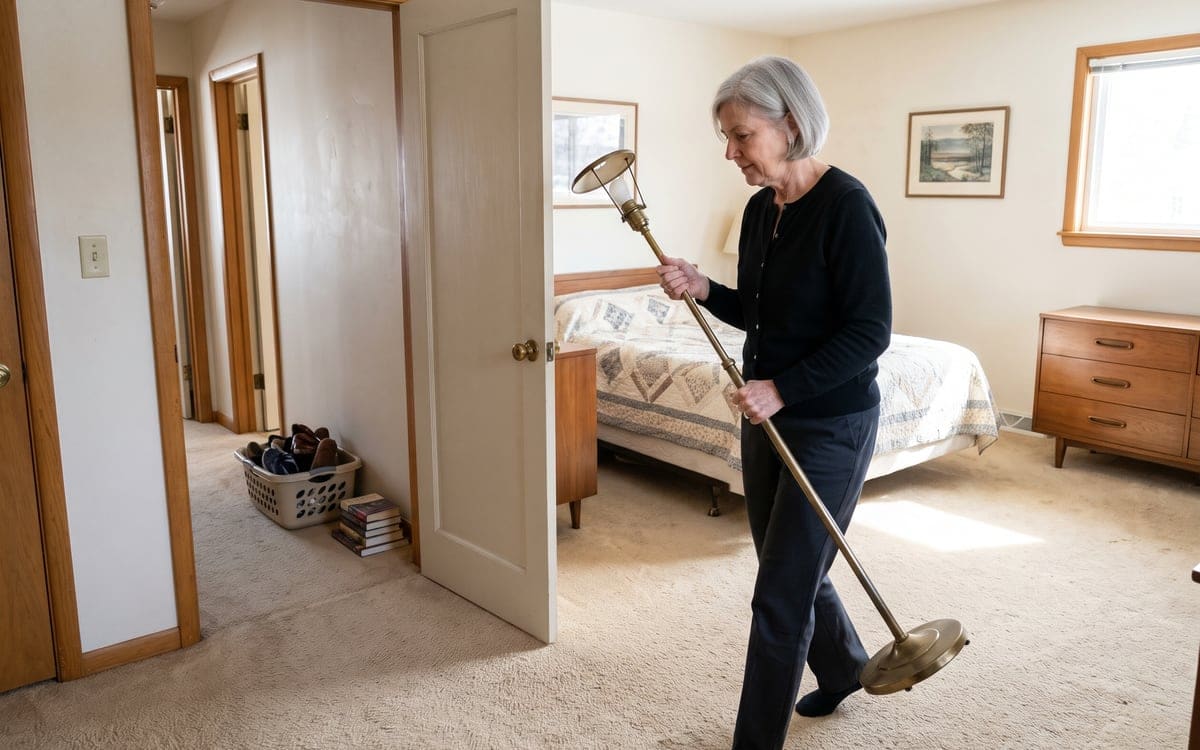
Clear the small things off the floor
A pickup pass through the rooms makes the cleaning go better. Lift the kids' toys, the shoes by the door and the laundry basket off the pile; move a plant on the floor onto a counter. Lamps and side tables that lift easily go onto a bed or in another room.
Cords are the other low thing worth moving. A phone charger that runs along a baseboard, a lamp cord behind the couch or an extension cord to a fan can be coiled onto a chair before the day.
Big furniture is something to tell us about
The heavy pieces are not something to drag around alone on the day. Say what rooms are being cleaned and what pieces sit in them: a couch here, a bed there, a bookcase against the wall. Tell us about any pieces that stay put, like a piano, a tall china cabinet or anything bolted to a wall.
Never move something heavy yourself to get ready. Lifting a bookcase or standing a sofa on edge is how a person pulls a back or drops a corner on a foot. If a piece has to come out of the room, tell us when you call.
Pets and kids during and after
The front door opens more than usual, and the pile stays damp after the work is done. Somewhere else is the plan for a dog or a cat: a back bedroom with the door closed, a crate, a drop-off at a friend's place. A nervous dog with a propped door can slip past.
Kids do not have to clear out. The room being cleaned is not a play room while it dries, though. Damp carpet where it meets a tile or wood floor is a slip point: a sock on wet pile holds, and the next step onto tile slides. Keep socks and bare feet off the damp pile until it dries, and have the kids walk slowly between rooms rather than run.
Parking, the loading zone and the building
In Los Angeles the second half of preparing is about the building and the street. About 48 percent of the city's housing units sit in buildings of five or more units.1 The parking at the street matters, which means knowing where it works on your block.
Say when you call where parking works: a loading zone near the entry, a visitor spot in the lot, a short stretch of curb next to the building door, a cross-street without permits. Mention any permit-only parking, any visitor pass the manager's office issues, and the hours on any time-limited meters on the block.
Doors are the other thing. A gate code or a buzzer is worth mentioning. If a dog charges when the door opens, tell us that too.
Stairs and the elevator in an apartment building
A unit on an upper floor adds the question of stairs or elevator. Most renter households in the city live in buildings of five or more units.2
Some building rules can come up: an elevator used for a cleaning visit may need a reservation, a pad set up on the walls, or a window of hours. The hallway may have a runner the manager asks visitors not to drag anything across. Those are things the building office knows. Ask your manager a day or two ahead and tell us what they said.
What to point out before work starts
Point out the spots you want looked at closely, like the pet spot by the window or the brown ring behind the couch. Say which spots are new, which have been there for a while, and which you have tried to clean yourself.
The go-ahead comes after the rooms get looked at. A separate cost guide walks through what moves the price.
For couches and other upholstery, pull the cushions out and look at the fabric tag under them before the day. The couch page covers the service for the sofa itself; the services hub names the full set.
After the cleaning: airflow and furniture
A cleaned carpet keeps drying after the work is done. The one job for the household during that stretch is airflow. Open the windows if the weather is dry outside, run the ceiling fans, aim a box fan at the pile. The air conditioning on fan mode moves air across the room.
Furniture goes back once the pile is dry to the touch under the cushions and corners. Small pads under the wood feet of a couch are useful if the furniture is going back onto a patch that is not fully dry; a few plastic coasters or foam blocks from the kitchen set out before cleaning day do the job. On a rug drying flat, give it space on both sides and let it dry in a cross-breeze. Steam cleaning sends more water through the pile than a dry method, so the airflow matters more then.
| Settle before the day | Say on the call |
|---|---|
| Clear toys, cords and lamps | Rooms being cleaned |
| Plan where pets will be | A nervous dog or a cat that bolts |
| Walk the block for parking | Loading zone, visitor spot, gate code |
| Check with the manager | Elevator reservation or pad |
| Note the stair run or elevator | Floor, flight count, carpet type |
| List the spots you want seen | Pet spots, wine, coffee, old marks |