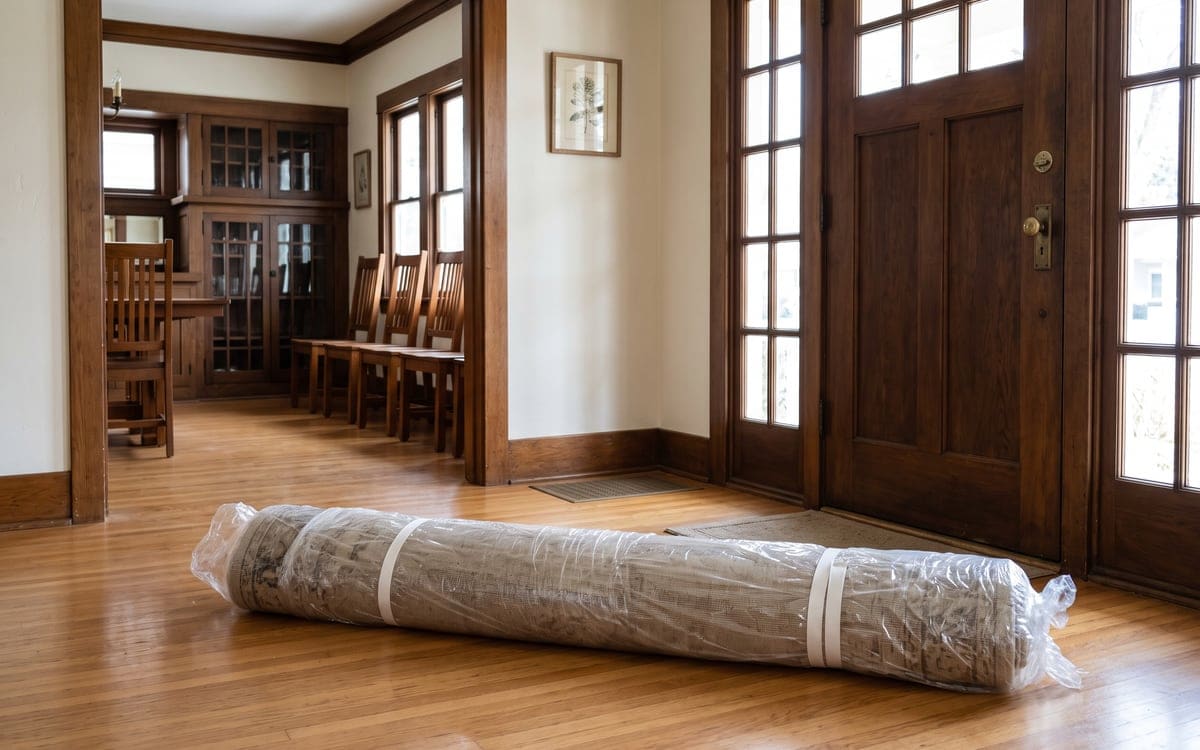
How a rug gets cleaned, from the fiber up
1. The fiber, the weave and the dyes
A hand-knotted wool rug behaves differently from a machine-made synthetic, and a viscose rug behaves like neither. The first look tells us the fiber (wool, cotton, silk, viscose, synthetic or a blend), how the rug was made (hand-knotted, flatwoven, tufted or machine-made) and whether the dyes seem to be set. A label on the back, if one is still there, often names the fiber; without a tag, the fibers and the weave do the telling.
2. Dry soil out first, from both sides
The dirt that works into a rug comes in from the top as people walk and settles into the back of the pile over months and years. Before any water or cleaner goes on, dry soil comes out first, from both sides of the rug. On an older rug this step pulls out a surprising amount.
3. A dye test on a hidden corner
Before any wet method starts, a small test spot on a hidden corner tells us whether the dyes are set. We put a drop of water and a dab of cleaner on a hidden corner and press a white cloth down; if color lifts, the plan changes. Some rugs cannot take water at all, and the test is how we find out before the room is wet.
4. The cleaning itself
Some rugs are cleaned in place, others go to a rug plant for a bath, a rinse and a dry on a rack.
5. The fringe, cleaned and combed straight
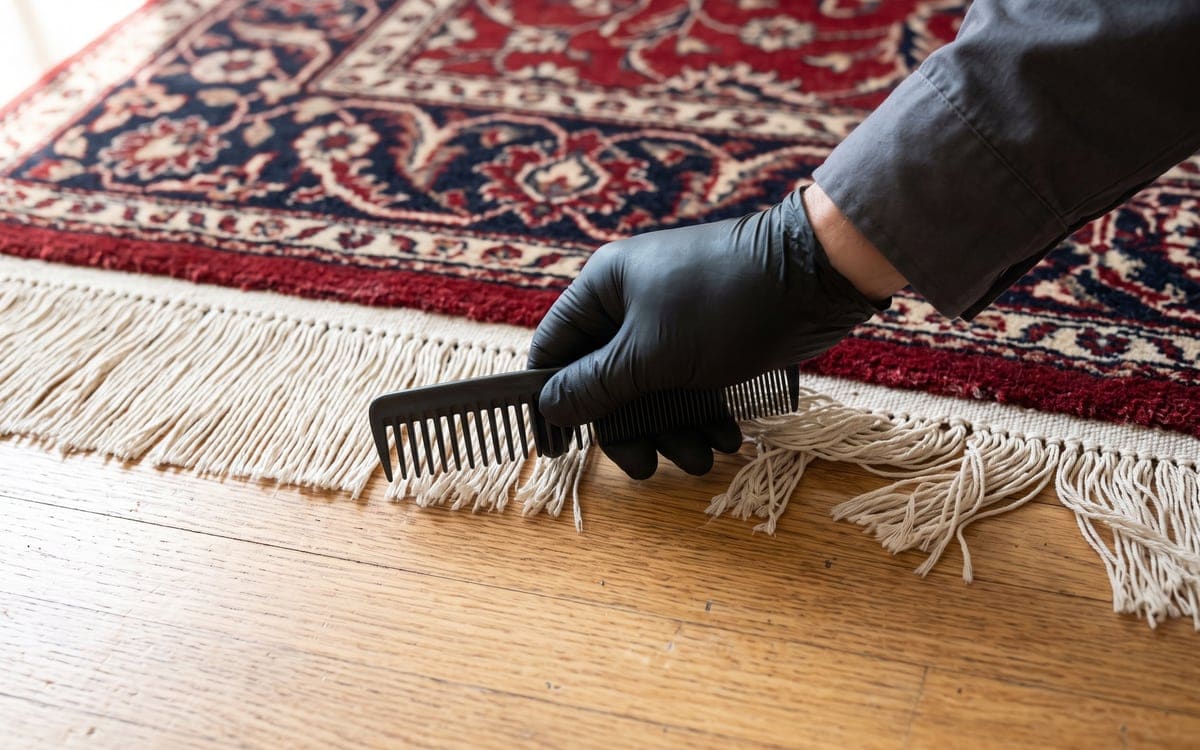
The fringe is the cotton or wool ends of the warp threads sticking out past the finished pile. It gets dirtier than the rug itself because it drags on the floor and holds the dirt from the carpet or the hard floor below. After the cleaning, the fringe gets a careful wash and a comb-through so it lies straight.
6. Drying flat, with airflow
A clean rug dries flat, with a fan or two moving air across it. A hair dryer or a heater against damp wool can shrink the backing or buckle the rug, so heat stays off; a fan and a cracked window dry the rug without that risk.
| Rug | What it is made of | What changes in the cleaning |
|---|---|---|
| Hand-knotted wool | Wool pile on a cotton or wool foundation | A method that reaches the base of the knots without soaking the backing |
| Persian and oriental | Wool, silk or a blend, hand-knotted or hand-tufted | A test spot first; some are rug-plant work |
| Machine-made synthetic | Nylon, polyester or olefin on a glued back | Takes water well; the backing can delaminate if soaked |
| Viscose or art silk | Rayon fibers made to look like silk | Stays dry; water can brown and flatten the pile |
| Silk | Natural silk, hand-knotted | A specialist job, cleaned dry or at a rug plant |
| Cotton flatweave | Dhurrie, kilim; no pile | A gentler wet method; dyes often need testing |
| Jute and sisal | Plant fibers, loose weave | Dry methods only; water stains and shrinks jute |
When rug cleaning fits a Los Angeles home
When it is the right page
- A rug that has gone dull, with grit at the base of the pile
- A spill or a pet accident on a rug
- A Persian or wool rug that has not been cleaned in years
- A rug coming out of storage before a move
- A dining room rug under a wood table
When another service fits better
- The carpet beneath or beside the rug: wall-to-wall carpet
- Pet urine spots on carpet: pet spots on carpet
- Torn fringe, holes or loose edges: rug repair, a separate craft
- A rug soaked by a leak or a flood: a restoration company
- The couch beside it: the couch nearby
Once we have seen the rug, we can tell which column it sits in. A hand-knotted wool rug with sound dyes cleans up well. Edges that are worn or coming apart need a rug repair person first; water on an unstable binding only makes the fraying worse, so we would rather point that out than wash a rug that has to leave anyway. Call (323) 677-2006 and tell us what you have, or look through everything we clean first.
What to check on your rug before you call
None of this needs a tool, and each answer helps decide how the rug gets cleaned.
Turn a corner over
Rows of small knots that show the pattern on the back usually mean a hand-knotted rug.
Find the label
A label on the back often names the fiber, such as wool, viscose or polyester.
Look at the fringe
Note whether it is tangled, brown or coming loose.
Think back
Remember any pet accidents, spills or colors that ran before.
What the visit covers
A rug cleaning covers the pile top and back and the fringe. Some rugs are cleaned in place, others go to a rug plant.