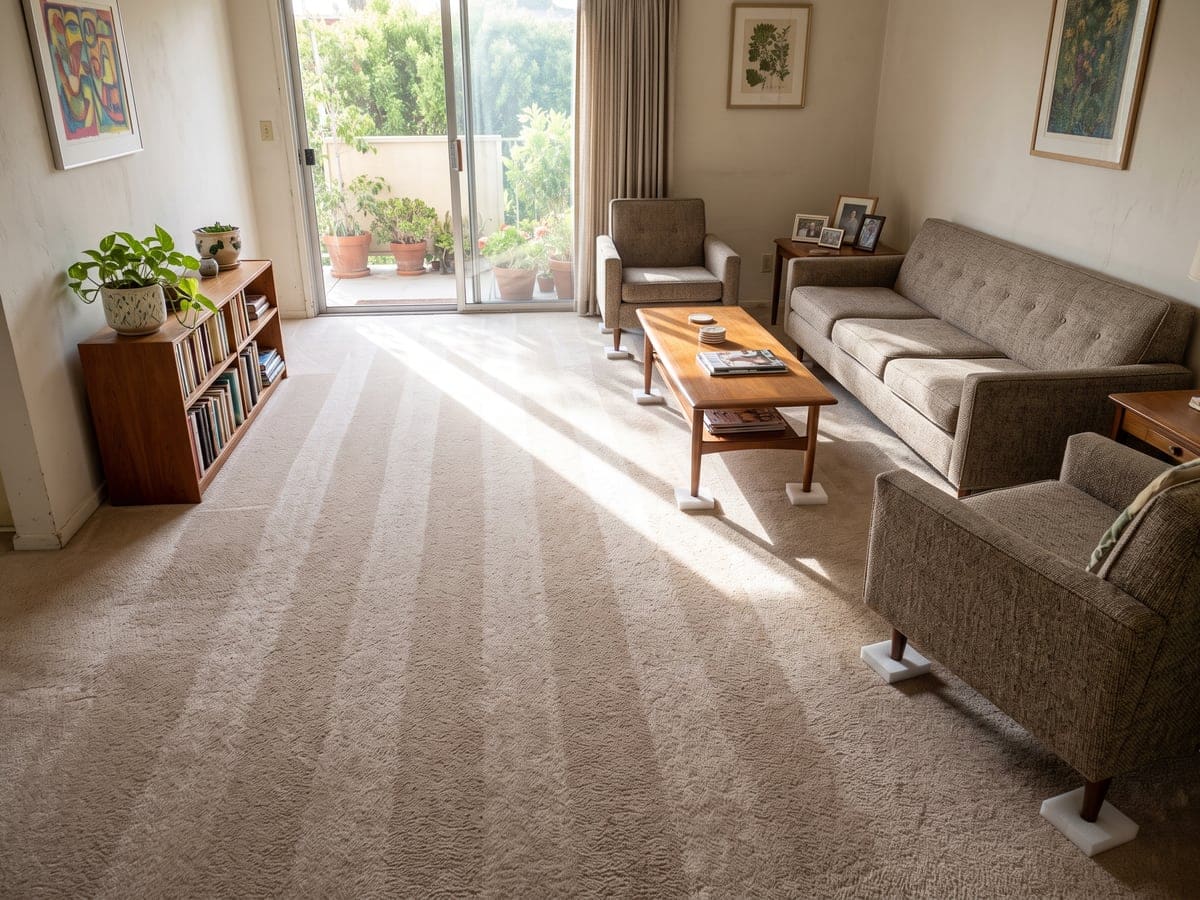
Before the cleaning
Do I need to be home?
Someone has to let us in and point out the rooms, and it does not have to be you. A roommate, a building manager or anyone you trust with the apartment works.
Do I need to move the furniture?
The answer depends on the room and the pieces. We go over it on the call and settle anything heavy at the door, so nothing gets lifted without the plan sorted first.
I live in an apartment: what should I tell you about the building?
Parking out front, whether there is a loading zone, which door the crew comes in through, stairs or an elevator up to the unit, how far the unit sits from the street, and any rules the building has about service visits or hours. The property manager may need to be told we are coming, and a service elevator sometimes gets reserved. About 48 percent of the city's housing units sit in buildings of five or more units.1
What about pets and kids?
Pets stay in a quiet room during the cleaning if that is easier on them, with water and a bed and the door shut. After the cleaning, keep pets and kids off the damp carpet. Damp pile is slippery under paws and small bare feet, and a dog on wet carpet tracks the damp through the rest of the apartment, especially where carpet meets hard flooring.
What gets cleaned
Steam cleaning or dry cleaning?
Steam cleaning is the trade's name for hot water extraction, the thorough job for a traffic lane that has gone gray, a dull living room or an empty unit before a move. Low-moisture cleaning uses less water than steam cleaning. The guide on steam or dry carpet cleaning walks through both methods and the kinds of carpet each one suits.
Do you clean rugs, couches, mattresses and tile?
Each surface has its own page: area, wool and Persian rugs, sofas, sectionals and chairs, mattresses on the frame and tile and grout in kitchens and bathrooms. Each has its own method and its own price, so a visit for one is not a visit for all four.
Do you clean stairs?
Carpeted stairs are part of carpet steam cleaning rather than a separate page. They take more work per square foot than a hallway, because the vertical face of each step collects dirt that a vacuum reaches last, and a wand works a stair tread one step at a time.
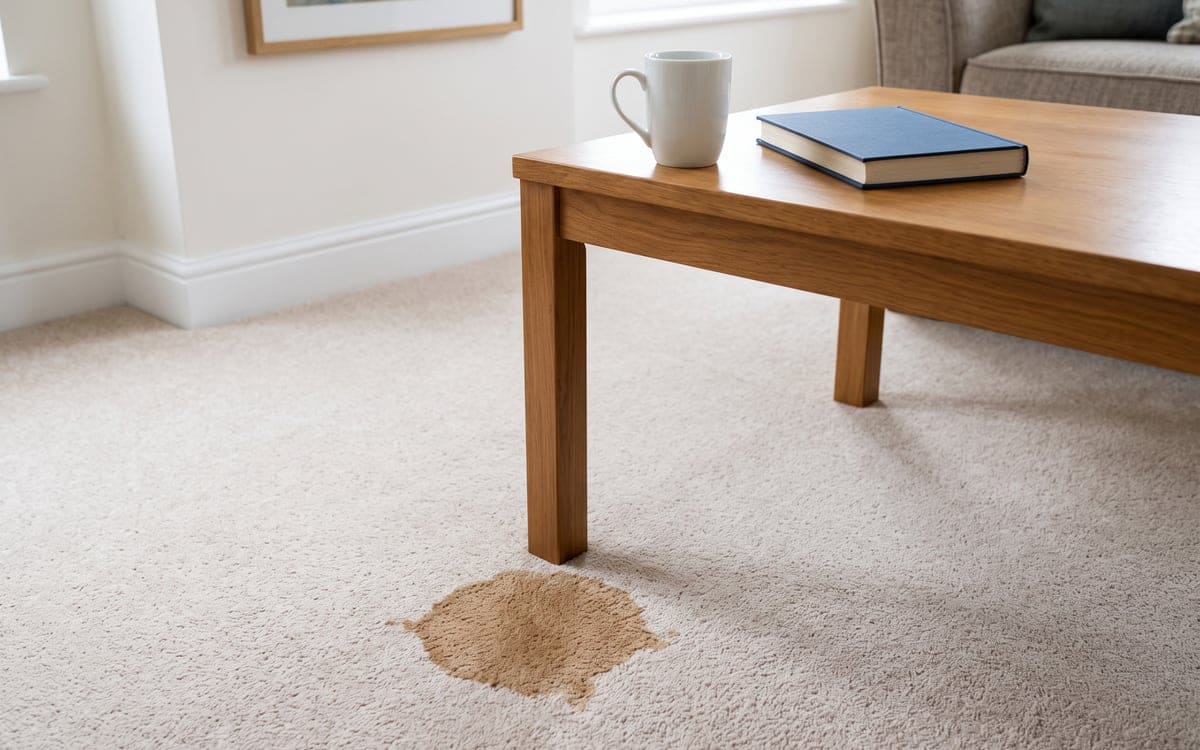
Can every stain come out?
Bleach spots and some older dye stains are lost color rather than dirt, and cleaning cannot put color back. If a stain has already been treated with a store product that set it, that changes the odds too. Tell us what has been tried so far, when the spot got there, and whether anything was already poured on it; the method is set by the carpet in front of us.
Do you handle fleas or bed bugs?
Flea and bed bug work is a job for a licensed pest control company.
Prices
How is carpet cleaning priced in Los Angeles?
By the shape of the job. The rooms and how many, the carpet and its condition, stairs, spots, pets, the couch or rug if those are on the list, the building, parking and the stairs or elevator. A hallway with a gray lane and a two-bedroom unit with a pet accident are both carpet cleaning, and they are not the same price. What goes into a carpet cleaning price walks through each driver.
Does a cleaning start before I agree?
No. The rooms get looked at before any work starts, and nothing starts until you give us the go-ahead.
Drying and after
How long will the carpet be damp?
Drying is airflow, fans and open windows where you can. A thin cut-pile dries sooner than a thick wool, a cross-breeze speeds it up, and a sealed room with the air off slows it down. The weather and the room shape the answer more than anything else.
When can the furniture go back?
Furniture that moved for the cleaning waits until the carpet is dry underneath, so a wood foot does not transfer color to a damp fiber and a metal foot does not rust.
Los Angeles rules
What does city code say about the dirty water?
City code says no person shall discharge untreated wastewater from steam cleaning or mobile carpet cleaning into the storm drain system,2 and the same code counts streets, gutters, conduits and channels as part of that system,2 so a bucket poured by the curb counts the same as water going down an inlet.
Is storm drain water treated?
No. Stormwater and urban runoff pick up sediment, airborne chemicals, pet waste, trash and auto fluids and carry them into the storm drains, which flow to local rivers, creeks and the ocean untreated,3 per LA County Public Works. Dirty wash water never belongs there.
Talking to us
What happens when I call?
You tell us about the place: the rooms, the carpet, stains, pets, the couch or rug if any, the building, parking and how we get in.
What should I have ready?
A rough map of the apartment or house in your head: the number of rooms with carpet, which rooms have stairs or an area rug, which room has the couch, the stains that bother you most and when they got there, and the parking and access out front. Any product to avoid or anything to leave alone, too.
Can I leave my number instead of calling?
The callback form sits below the phone number on every page, including this one. It takes a name, a number and a short note, and we come back to you with a return call. The number and the form are both on the contact page, with a short list of what to have ready when the return call comes.
What should I describe about the carpet itself?
How many rooms have wall-to-wall carpet, how many have an area rug on top of a bare floor, where the stairs are, and the stains that bother you most.
What about ash indoors after a smoky stretch?
South Coast AQMD advises cleaning indoor ash with a vacuum with a HEPA filter, or misting lightly and then sweeping gently with a broom.4
Does the building type change the plan?
Yes. About 48 percent of the city's housing units sit in buildings of five or more units, and about 17 percent in buildings of 50 or more.1 A unit at the end of a long interior hallway reads differently from a street-level duplex, which reads differently from a detached house with a driveway. Describe the walk from the curb to the carpet when you call, including any locked gates, service doors or elevator rules.