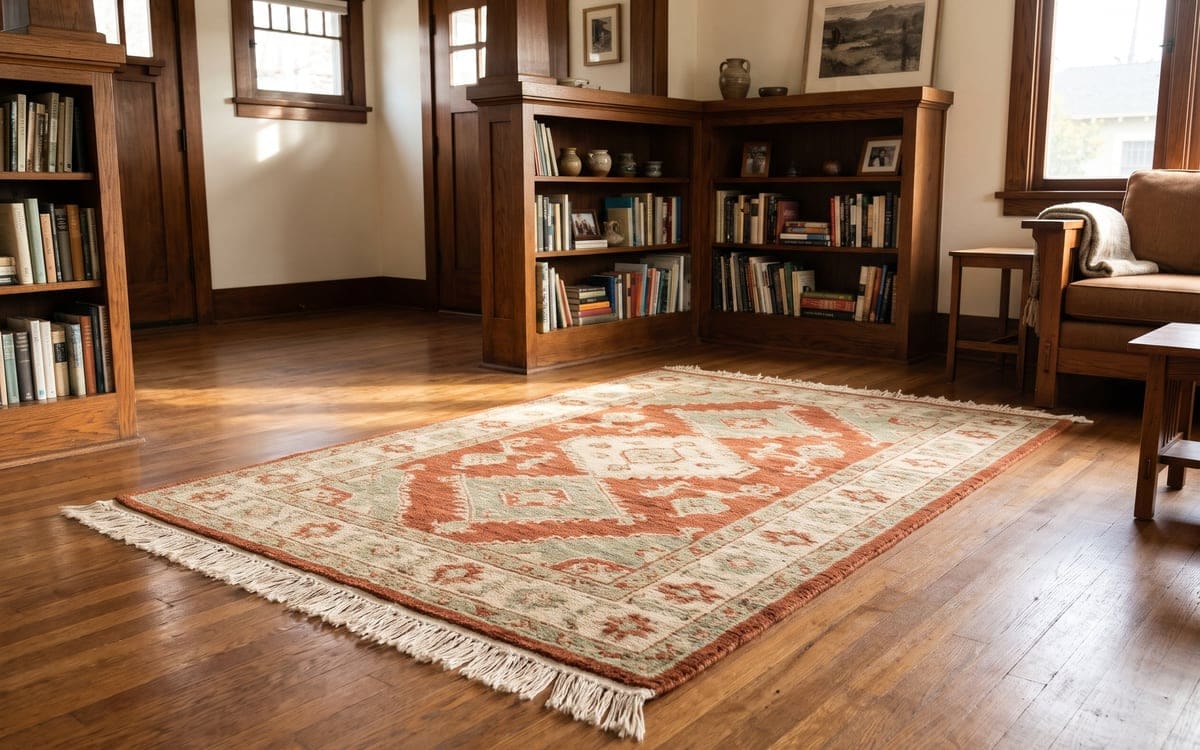
Wool holds dry soil deep in the pile
A wool pile is springy and curly in a way a nylon pile is not. Each fiber has small scales along its length, and the yarn traps dry soil tightly. A rug that looks clean on top can hold a surprising amount of grit at the back of the pile, especially if it has been down in a living room for years.
The first step on any wool rug cleaning is a careful dry pass. Vacuuming both sides of the rug matters: the front for the dust that landed on it, and the back once the rug is lifted off the floor, because that back shakes loose soil that was riding in the base of the pile.
Household vacuuming on the top of a wool rug keeps the base of the pile from loading up. For the backing side, a lift and a careful vacuum pass when the rug is being moved for other reasons helps keep the dry soil moving.
A dye test comes before any water
Water is the thing that moves color in a wool rug, so a dye test is the first check. A small corner, a white cloth, a dab of water or a mild rinse solution, and a look at the cloth tells us whether the dyes in that rug are staying put or bleeding. Some wool rug dyes can migrate when wet.
If a color shows on the cloth, that part of the rug cannot have water poured through it. Water poured on a wool rug at home can run the dye and shrink the pile against the backing. The test and the inspection decide how the cleaning goes, not a default.
Gentle cleaning and a thorough rinse
A wool rug needs mild water, a mild cleaner and gentle agitation. The pile is worked with a soft tool rather than a hard brush that would open up the yarn.
The rinse is where the care matters most. Residue left in a wool pile holds moisture, attracts soil later and can give a rug a slow smell as it dries. A thorough rinse that runs until the water coming out of the pile is clear is what a wool cleaning needs. For a spill, blot and leave it there, then call. The stain removal guide covers the towel-and-water step for carpet; a wool rug is the one piece where even that step is cut short.
Drying flat
Wool dries well lying flat with air moving over both faces. The pile stays in shape, the backing does not pucker, and the rug comes out of the drying the same size it went in. At home, lay the rug flat with no heat, run fans on both sides and open the windows when the outside air is dry.
The fringe and the backing
The fringe is part of the rug, not a trim. It is the warp threads of the weaving coming out of the ends and knotted off, so a damaged fringe is damage to the structural threads that hold the rug together. Fringe cleans gently with a soft brush and a mild cleaner, and dries flat with the rest of the rug. A fringe that is already fraying should be pointed out before the cleaning; cleaning a fringe is cleaning, not repair, and a fringe needing repair is a job for a rug restorer.
The backing is where you see what shape the rug is in. A hand-knotted rug shows its pattern on the back as clearly as the front; the dye lines are the same yarns tied through. A tufted rug, which is a different construction, has a scrim and a glue layer on the back instead. Tufted rugs with glue backings behave differently in cleaning, and the construction decides how the cleaning goes.
| Fiber question | What to notice at home |
|---|---|
| Pile fiber (wool, synthetic, blend) | A fiber burn test is a rug plant check, not a home one |
| Dye stability | A rug cleaner tests a corner before any water |
| Back of the rug | Hand-knotted shows the pattern through; tufted shows a scrim |
| Fringe condition | Clean, soiled, fraying or loose |
| Spots and old pet marks | Fresh residue or set-in color shift |
| Overall soil load | Light surface dust, or embedded grit from years down |
What to do at home: vacuum both sides, blot spills
Day-to-day wool rug care at home is short. Vacuum the top of the rug on a weekly rhythm. Lift it when you move the furniture and vacuum the floor under it; shake the rug outside and vacuum the back. Rotate the rug so the sun hits a different part and the furniture crushes a different part.
For a spill on wool, blot with a dry white towel, press straight down, and stop there. Do not pour water onto a wool rug, do not scrub it, and do not spray a store product on it. A towel pulls up what it can; past that, call. If a pet accident happens on a wool rug, pull the rug up at the spot, slip something waterproof under it so the floor underneath is protected, blot the top, and call before the spot dries. Rug cleaning is the service page.