Most Los Angeles households rent
Carpet cleaning at the end of a lease is a renter question in a city where most households rent. Renters occupy about 920,674 of the city's 1,439,097 occupied homes, around 64 percent.1 That shapes what a move out cleaning looks like here: small units, apartment buildings and shared parking, with a timeline set by when the keys are due back.
The job is the same cleaning for an apartment or a whole house. What changes is the building, the parking and the stairs, which are things to say when you call.
Read the lease and ask the landlord
Lease language on carpet cleaning varies by building, so what the lease asks for and how any deposit is handled is a conversation with the landlord. Read the lease section on cleaning and move-out, and ask the manager or landlord anything that is unclear.
The useful questions are plain: does the landlord want proof of cleaning, does the lease name a specific kind of cleaning, is there a preferred vendor, and when does the carpet need to be done by. If the answer names end of lease carpet cleaning as a lease requirement, you have the schedule and the paperwork settled before any cleaning is arranged. If it does not, calling for a cleaning before a walk-through is still a reasonable step.
Empty rooms clean differently
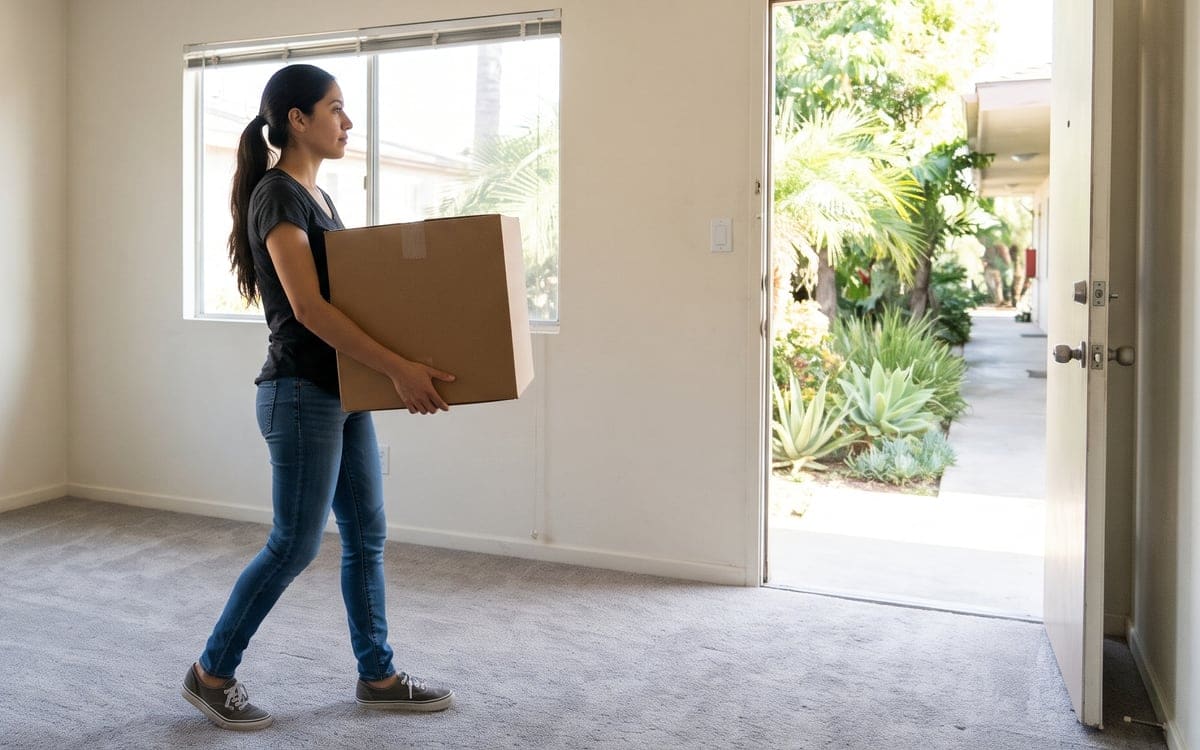
A move out cleaning is the one case where every piece of furniture is already out. That changes the work a little. The whole floor is reachable, so the pile under where the couch sat gets the same pass as the pile in front of it. Edges along the baseboards are open, and the pile against the wall often has more loose soil in it than the middle of the room, so those edges get careful attention.
An empty room shows every spot. A couch that sat in a living room for a long stretch left a square of lighter pile under it; the carpet around it has been walked on, cleaned a few times and faded, while the carpet under it has not. That contrast is nothing a cleaning puts back; it is the carpet's own history. We can tell you at the walk-through what cleaning will even out and what is pile shading that is going to show through anyway.
Pet spots and traffic lanes at the end of a lease
Older pet spots in an empty bedroom reached the backing and often the pad; the dog urine guide covers what is actually under the pile. A cleaning that flushes the backing and the pad is the right work for a pet spot going into a walk-through.
Traffic lanes along a hallway between bedrooms often read gray in an empty room against the carpet to either side. A cleaning works on the embedded soil that makes a lane dark. Pet carpet cleaning and carpet steam cleaning are the two services most relevant to a move-out.
What cleaning cannot change: wear, burns and lost color
A cleaning gets a carpet as clean as its condition allows. Some things cleaning cannot change, worth knowing before you call:
- Gray hallway lanes carry embedded soil and flat pile. A cleaning works on the soil, but the pile stays flatter than the carpet beside it.
- Yellow or orange patches from pet spots are a dye shift; residue clears, color stays.
- A dark round mark from a burn is a flooring question, not a cleaning question.
- Small cuts and tears belong with a flooring installer.
- Soft worn spots in front of a chair are lost pile from years of use. Pile does not grow back.
- A dented mark where a leg sat is pile crush; vacuuming after drying helps some.
Cleaning works on the residue in the fibers and lifts what sits on top of them. For replacement, patching and re-stretching, a flooring installer or a carpet retailer is the trade.
Timing the cleaning around the move
Timing is the one piece of a move-out that is easy to get wrong. The carpet cleaning works well after everything is out of the apartment, so the whole floor is reachable and no furniture is being dragged across a cleaned pile. Plan the cleaning after the moving truck has left and before the walk-through. Walking across damp carpet to lock up for the last time is fine. Moving the last of the boxes across a damp pile is where socks pick up fuzz and the clean pile dirties again.
For a small unit, which about 66 percent of the city's housing has, with two bedrooms or fewer and about 180,439 of them studios,2 the cleaning covers a few rooms and the schedule is simple. For a larger place or a townhouse with stairs, keep the walk-through plan after the furniture is out. About 68 percent of renter households live in buildings of five or more units.3 In a building, an elevator reservation is a question worth asking the manager.