Steam cleaning is hot water extraction
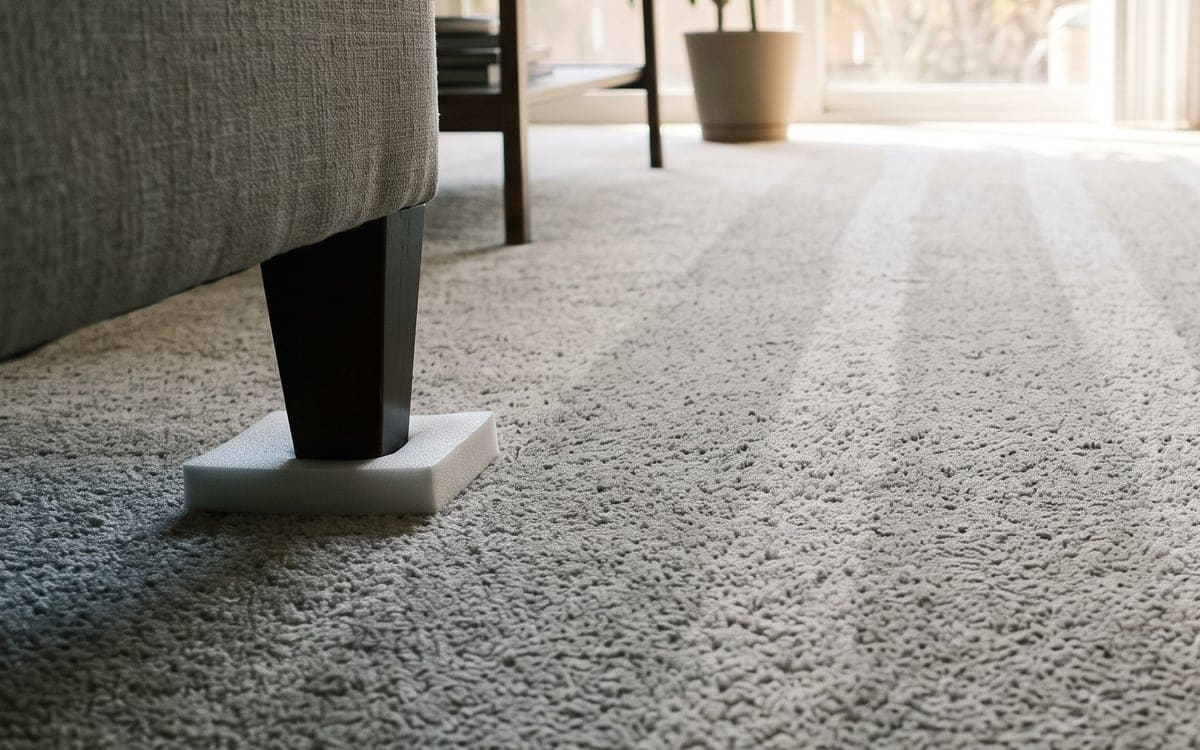
Steam cleaning is a trade name for hot water extraction, and the picture it brings up is misleading. There is no cloud of steam at the wand. The wand sprays a hot rinse into the pile and pulls it straight back out with suction, in slow, overlapping passes. The carpet comes up damp, with straight wand stripes. Hot water extraction, step by step covers the whole-room version of the job.
Two ways to clean wall-to-wall carpet
Both lift soil out of the pile. They differ in how much water goes in and how much has to dry.
Hot water extraction
- Also called steam cleaning.
- A hot rinse goes into the pile and is pulled straight back out.
- Leaves the carpet damp, so airflow matters.
Low-moisture cleaning
- Often called dry cleaning, though it uses some moisture.
- A small amount of cleaner is worked in and picked back up with the soil.
- Leaves the carpet less damp.
The method runs in sequence. The crew vacuums first to pull dry soil out before any water comes near the fibers. A pre-spray goes on the traffic lanes and spots and gets worked into the pile. The wand moves across the room in sections, with slow overlapping strokes. The spots get a second look after the first pass. The pile is groomed to stand back up before the furniture returns, and the room goes to drying with airflow and open windows.
That sequence is the same whether the extractor is in a truck in the driveway or carried in to the unit. A truck mount has more pressure and more suction; a portable has less of both, and crews reach for one where the other cannot get to the unit.
Dry cleaning still uses some moisture
Dry cleaning for carpet does not mean the carpet is cleaned without any water. It means less water than extraction uses, and the carpet is drier at the end of the job than after a steam cleaning. A few methods fall under the name.
The most common one spreads an absorbent compound (a cleaner-soaked, slightly damp mix) across the carpet, works it into the pile with a counter-rotating brush and then vacuums it back out. The compound carries the soil with it. Another method uses an encapsulating cleaner sprayed in a mist and worked in with a bonnet or a brush; the cleaner wraps around the soil as it dries and comes up with the next vacuum. A third uses a cleaner-soaked bonnet pad on a buffer. None of these soaks the pile the way extraction does.
Low-moisture cleaning is the plainer name a lot of crews use for the group, since none of these is really dry.
What each one leaves in the carpet
The two methods lift the same kinds of soil, in different ways. Hot water extraction flushes it out, so the dirt and the cleaner and the soil go into the recovery tank together. The carpet comes up damp because that is the trade-off: more rinse, more carried out, more water left to dry. Low-moisture cleaning picks the soil up with a carrier (the compound, the capsules or the bonnet pad) that comes out with the next vacuum. Less rinse, less water, less drying.
Each has its own thing to watch for. Extraction can overwet a carpet in careless hands, and a wet pad is where cleaning problems start. Low-moisture cleaning can leave residue in the pile if the compound or capsules are not fully vacuumed out, and that residue attracts soil later.
Drying depends on airflow and the room
How quickly a cleaned room comes back to normal depends mostly on air moving through it. Open windows pull wet air out; fans across the pile help the drying along; closed-up rooms with no airflow slow it down.
Downtown averages 14.25 inches of rain a year, 9.41 inches of it from December through February.1 Summer is close to rainless downtown: June, July and August together average 0.11 inch, and August averages none.1
Both methods work in both seasons. The drying plan changes with the room: fans sit next to the carpet to keep air moving, open windows do what they can, and a closed-up room gets a fan to make up the difference.
Which carpets and rooms suit which method
The fiber in the pile and the soil on it decide which method fits.
A nylon carpet in a living room with gray lanes and the odd spot takes hot water extraction well. The fiber tolerates heat and water, and the extraction flushes the soil out. A polyester cut pile with pet spots takes extraction too; polyester holds onto oily soils, and the pre-spray and the rinse carry those out.
An olefin loop or a berber in a hallway often prefers low-moisture cleaning. Olefin is sensitive to heat and tends to show wet stains if a carpet is overwetted, and loop berbers hold water in the loops and dry slowly. Encapsulation cleaning or an absorbent compound in those rooms clears the lanes without leaving the pile damp for a long stretch.
A rental between tenants, where the carpet needs to look right and the unit cannot sit damp, often takes bonnet or encapsulation cleaning well. A home living room where someone has had an accident near the couch is a different job: the water needs to flush the backing and the pad, so extraction fits. Wool and silk rugs are their own category again, with a fiber and dye check before any method is picked, and upholstery uses tools scaled to a cushion rather than a floor.
| Method | How it works | What it suits | What to watch for |
|---|---|---|---|
| Hot water extraction (steam) | A hot rinse into the pile, suction pulls it back out | Soiled carpets, pet work in the pad, move-outs, nylon and polyester | Drying and careless overwetting |
| Encapsulation (low moisture) | A cleaner mists on, wraps soil, vacuums out | Light to medium soil, olefin loop, between-tenant refreshes | Residue if not fully vacuumed later |
| Absorbent compound (dry) | A damp compound brushed in, vacuumed out | Lanes in olefin or berber, light refreshes | Compound left in the pile if rushed |
| Bonnet (low moisture) | A cleaner-wetted pad on a buffer picks up soil | Light residential refreshes between cleanings | Does not reach soil in the backing |
Shampooing is an older third method
Carpet shampooing is a different method again, older than the two above. A detergent is foamed into the pile with a rotary brush, the carpet dries, then the dry foam and the soil it holds are vacuumed out. It cleans the pile but tends to leave residue, and the residue attracts soil to the same spots later unless the carpet is rinsed with extraction after. A lot of what people call shampooing today is really extraction (which also uses a detergent during the pre-spray), so the name has drifted. If someone offers a shampoo-only cleaning, it is worth asking whether a rinse comes after.
A rented machine is a third option again, a smaller version of extraction with less suction and less rinse.
Asking any company which method it uses
A short list of questions makes the comparison clearer, whichever company you call.
Ask which method the crew uses on carpet like yours (nylon cut pile, olefin loop, polyester, wool) and why. Ask how pet work on an older spot is handled, since the method for a dog spot that reached the pad is often different from the method for a plain refresh. Ask what the room looks like after the cleaning in plain words. Ask what gets covered in what changes a price for the rooms you want cleaned, since a method is only part of a quote.
A useful phone answer walks through how the method fits your carpet rather than just naming the company's house method. A crew that asks about the fiber, the room and whether a pet lives there before suggesting a method is reading your carpet, not a script.